
What is Vinyl Flooring?
Types, Benefits, Costs & Guide for Singapore Homes
Vinyl flooring is a synthetic flooring material made primarily from polyvinyl chloride (PVC).
It is manufactured in multiple layers and is available in different formats, including flexible vinyl, luxury vinyl tile (LVT), luxury vinyl plank (LVP), and rigid-core vinyl such as SPC flooring.
Modern vinyl flooring is designed to replicate the appearance of natural materials such as wood, stone, marble and ceramic tiles while offering easy maintenance, good moisture resistance and a relatively comfortable surface underfoot.
For homeowners in Singapore, vinyl flooring is a popular option for HDB flats, condominiums and landed homes because it combines practical performance with a wide range of designs.

Quick Answer: What is Vinyl Flooring?
Vinyl flooring is a durable synthetic flooring material primarily made from PVC.
It is constructed in layers that provide protection, design, stability and comfort.
Depending on the product, vinyl flooring can be:
- Flexible or rigid
- Plank-shaped or tile-shaped
- Installed using adhesive or a click-lock system
- Designed to resemble timber, stone, marble, concrete or ceramic tiles
- Suitable for many residential and commercial applications
Vinyl flooring is generally water-resistant and easy to maintain, although its resistance to water depends on the specific product and installation.
The seams, joints, subfloor and installation quality can all affect the performance of the completed floor.
How is Vinyl Flooring Made?
Most modern vinyl flooring consists of several layers, although the exact construction varies between manufacturers and products.

1. Wear Layer
The wear layer is the transparent protective surface at the top of the flooring.
It helps protect the design from everyday wear, scratches, stains and abrasion.
Wear layer thickness is an important consideration when choosing flooring, particularly for areas with heavier foot traffic.
2. Design Layer
The design layer contains the printed pattern that gives vinyl flooring its appearance.
Advanced printing technology allows vinyl flooring to reproduce the appearance of:
- Natural wood
- Oak and other timber patterns
- Marble
- Slate
- Stone
- Concrete
- Ceramic tiles
3. Core Layer
The core provides much of the flooring’s structure and stability.
Traditional vinyl products may have a more flexible construction, while rigid-core products such as SPC use a denser, more rigid core.
4. Backing Layer
The backing layer provides additional support and can help improve comfort and sound performance, depending on the product.
Some products have an integrated underlay, while others require separate underlay or specific subfloor preparation.
The result is a flooring material that is attractive, easy to maintain, and suitable for Singapore’s humid climate.
What Are the Different Types of Vinyl Flooring?
Vinyl flooring is not a single type of product. It is available in several constructions and installation methods.
Understanding the differences can help homeowners choose a suitable flooring system for their renovation.
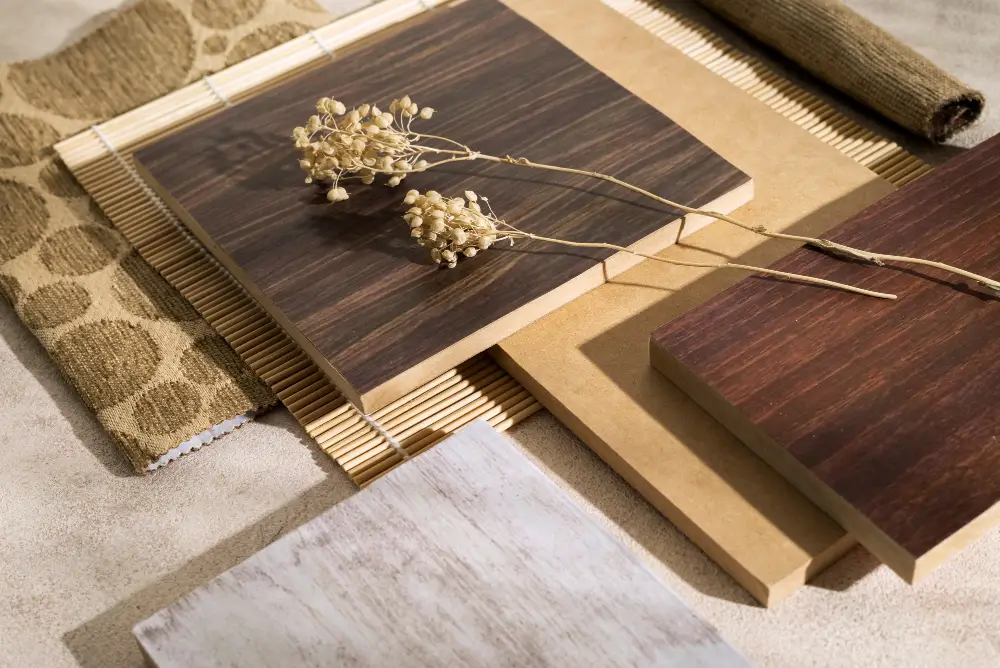
Luxury Vinyl Plank (LVP)
Luxury Vinyl Plank, commonly abbreviated as LVP, is vinyl flooring manufactured in plank-shaped pieces.
It is primarily designed to reproduce the appearance of timber flooring.
LVP is popular for:
- Living rooms
- Bedrooms
- Dining areas
- Study rooms
- Residential renovations
Wood-look vinyl planks are available in different colours, plank widths, textures and patterns.
Luxury Vinyl Tile (LVT))
Luxury Vinyl Tile, or LVT, is designed to resemble tile and natural stone surfaces.
LVT can reproduce the appearance of:
- Marble
- Ceramic tiles
- Limestone
- Slate
- Concrete
- Other natural stone surfaces
LVT can be a practical alternative for homeowners who want a tile-like appearance without the harder feel of conventional ceramic or stone flooring.
Glue-Down Vinyl Flooring
Glue-down vinyl flooring is installed by applying adhesive to the prepared subfloor.
This type of installation can provide a secure and stable floor when the correct adhesive and installation procedures are used.
It is particularly important that the subfloor is properly prepared because imperfections can affect the appearance and performance of the finished floor.
Click-Lock Vinyl Flooring
Click-lock vinyl flooring uses an interlocking system that allows individual planks or tiles to connect together.
Depending on the product and installation requirements, it can be installed as a floating floor without fully bonding each plank to the subfloor.
Click-lock systems are commonly used in residential renovation projects.
SPC Flooring
SPC is generally considered a type of rigid-core vinyl flooring. Its core typically combines PVC with a mineral filler, commonly limestone-based material, to create a dense and dimensionally stable structure.
Compared with more flexible vinyl flooring, SPC flooring has a rigid construction and can provide a firmer feel underfoot.
Read our detailed guide to SPC flooring and how it compares with traditional vinyl flooring.
What Are the Benefits of Vinyl Flooring?
Vinyl flooring has become popular because it combines practical performance with a wide range of design choices.

1. Water Resistant
However, water-resistant does not necessarily mean that every vinyl floor is completely waterproof.
The product construction, joints, installation method and subfloor can all affect the finished floor’s resistance to water.
For areas with significant moisture exposure, always check the manufacturer’s specifications and installation requirements.
2. Easy to Maintain
Vinyl flooring is relatively easy to clean.
Routine maintenance generally involves:
- Sweeping or vacuuming regularly
- Removing spills promptly
- Damp mopping when required
- Using cleaning products recommended for the specific flooring
Unlike natural timber flooring, vinyl flooring does not normally require sanding, polishing or refinishing.
3. Wide Range of Designs
One of the biggest advantages of modern vinyl flooring is its design flexibility.
It can replicate the appearance of:
- Natural timber
- Oak
- Walnut
- Marble
- Stone
- Concrete
- Ceramic tiles
This allows homeowners to achieve different interior styles without necessarily using the natural material being imitated.
4. Comfortable Underfoot
Vinyl flooring generally has a softer feel underfoot than hard ceramic or stone surfaces.
The exact level of comfort depends on the flooring construction, thickness, underlay and subfloor.
5. Relatively Affordable
Vinyl flooring is often more affordable than natural hardwood, stone and some premium tile options.
However, the total project cost depends on more than the flooring itself.
Factors such as installation, floor preparation, removal of existing flooring, skirting and project size can affect the final cost.
6. Suitable for Many Renovation Projects
Vinyl flooring is available in different thicknesses, constructions and installation systems, giving homeowners flexibility when planning a renovation.
It can be used in many areas of a home, provided that the chosen product is suitable for the environment and the subfloor is properly prepared.
What Are the Disadvantages of Vinyl Flooring?

1. Can Be Damaged by Sharp or Heavy Objects
Vinyl flooring can be scratched, dented or damaged by sharp objects, heavy furniture and excessive force.
Using furniture pads and taking care when moving heavy objects can help reduce the risk of damage.
2. Cannot Normally Be Refinished
Solid hardwood flooring can often be sanded and refinished several times during its service life.
Vinyl flooring generally cannot be refinished in the same way.
If a plank or tile is significantly damaged, replacement may be necessary.
3. Product Quality Varies
Not all vinyl flooring products are manufactured to the same standard.
Differences can include:
- Wear layer thickness
- Overall thickness
- Core construction
- Surface finish
- Dimensional stability
- Locking system
- Warranty
- Installation requirements
The cheapest product is therefore not necessarily the most economical choice over the long term.
4. Installation Quality Matters
Even good-quality flooring can perform poorly if it is installed incorrectly.
Subfloor condition, moisture, flatness, expansion requirements, adhesive selection and installation technique can all affect the finished floor.
Is Vinyl Flooring Suitable for Singapore Homes?

Vinyl flooring can be suitable because it:
- Handles normal indoor humidity well
- Is easy to clean
- Offers good design flexibility
- Is generally resistant to everyday spills
- Provides a relatively comfortable surface
- Is available in different installation systems
- Can be used in many residential applications
However, flooring should always be selected according to the specific room, product specifications and site conditions.
- HDB flats
- Condominiums
- Landed houses
- Offices
- Retail shops
How Long Does Vinyl Flooring Last?

The lifespan of vinyl flooring depends on several factors, including:
- Product quality
- Wear layer
- Flooring construction
- Foot traffic
- Installation quality
- Subfloor condition
- Exposure to sunlight
- Cleaning and maintenance
Many residential vinyl floors can provide around 10–20 years of service, while higher-quality products that are properly installed and maintained may last longer.
Rather than judging durability solely by price, homeowners should consider the manufacturer’s specifications, wear layer, warranty and suitability for the intended application.
What Should You Look for When Buying Vinyl Flooring?
Choosing vinyl flooring involves more than selecting a colour or wood pattern.
Consider the following factors before purchasing.
Wear Layer
The wear layer provides protection against everyday wear and abrasion.
For areas with heavier traffic, a more substantial wear layer may be appropriate.
Overall Thickness
Flooring thickness can affect the feel, construction and installation requirements of the product.
However, thicker does not automatically mean better. The overall construction of the flooring should also be considered.
Core Construction
Understand whether the flooring has a flexible or rigid core and how its construction suits your intended application.
Installation Method
Common installation methods include:
- Glue-down
- Click-lock
- Floating installation
Each method has different requirements for the subfloor and installation process.
Subfloor Requirements
A clean, dry, stable and sufficiently level subfloor is important for achieving a good installation.
Existing tiles or other flooring may sometimes be suitable as a base, but this depends on the condition and levelness of the existing surface and the requirements of the new flooring.
Warranty
Check the manufacturer’s warranty and understand what it covers.
A warranty can provide useful information about the manufacturer’s expected product performance, although warranty terms vary.
Product Specifications
Always check the manufacturer’s technical specifications rather than relying solely on marketing descriptions.
Important specifications may include:
- Wear layer
- Thickness
- Dimensions
- Core construction
- Water resistance
- Installation method
- Recommended applications
- Cleaning requirements
How Much Does Vinyl Flooring Cost in Singapore?
The cost of vinyl flooring in Singapore varies depending on the product, brand, quality, installation method and site conditions.
The overall renovation cost may also include:
- Flooring materials
- Installation
- Removal of existing flooring
- Floor preparation
- Skirting
- Additional carpentry or renovation work
- Other site-specific requirements
A small bedroom and a full-home flooring project can therefore have very different costs even when the same flooring product is used.

For a detailed breakdown, see our guide to Vinyl Flooring Cost in Singapore.
Want to Know the Exact Cost of Vinyl Flooring for Your Home or Office?
Need personalised advice or would like a quotation for your project?
Feel free to contact us via WhatsApp or our Online Form.
Our team will be happy to help you find the most suitable flooring solution for your home.
Vinyl Flooring vs SPC Flooring
Vinyl flooring and SPC flooring are closely related, but they are not necessarily identical products.
Traditional flexible vinyl flooring generally has a softer and more flexible construction, while SPC is a rigid-core vinyl flooring with a dense mineral-based core.
Vinyl Flooring
- Generally softer underfoot
- More flexible
- Available in different constructions
- Can offer a comfortable walking surface
SPC Flooring
- Rigid construction
- High dimensional stability
- Dense core
- Firm feel underfoot
- Available in many wood and stone designs
The better option depends on the room, subfloor, desired feel, installation method and performance requirements.
Read our detailed comparison: SPC Flooring vs Vinyl Flooring: Which Is Better for Singapore Homes?
Vinyl Flooring vs Tiles
Vinyl flooring and ceramic or porcelain tiles have different characteristics.
Vinyl Flooring
Softer underfoot
Generally easier to install
Easier to replace individual planks or tiles depending on the installation system
Wide range of wood and stone designs
Generally easier to maintain
Tiles
Hard and durable surface
Excellent resistance to heat
Wide range of colours and patterns
Can provide very long service life when properly installed
Grout maintenance may be required
The right choice depends on your budget, room, design preferences, expected use and maintenance priorities.
See our detailed guide to Vinyl Flooring vs Tiles: Which Flooring Option Is Better?
How Do You Maintain Vinyl Flooring?
Vinyl flooring is generally low-maintenance.
To keep it in good condition:
- Sweep or vacuum regularly to remove dirt and grit.
- Clean spills promptly.
- Use a damp mop when necessary.
- Avoid excessive water during cleaning.
- Follow the flooring manufacturer’s cleaning recommendations.
- Use suitable furniture pads under heavy furniture.
- Avoid dragging heavy furniture directly across the floor.
- Protect the floor from sharp objects and abrasive materials.
Regular maintenance can help preserve both the appearance and performance of the flooring.
Key Takeaways
- Vinyl flooring is a synthetic flooring material primarily made from PVC.
- Modern vinyl flooring is available in flexible and rigid-core constructions.
- LVP is commonly used for wood-look plank flooring, while LVT is commonly used for tile and stone-look flooring.
- SPC is generally a type of rigid-core vinyl flooring.
- Vinyl flooring is generally water-resistant and easy to maintain.
- Product quality, wear layer, core construction and installation quality all affect performance.
- Vinyl flooring is suitable for many HDB flats, condominiums and landed homes in Singapore.
- The expected lifespan depends on product quality, traffic, installation, maintenance and environmental conditions.
- Homeowners should consider the wear layer, thickness, core, installation method, warranty and subfloor requirements before purchasing.
- The best flooring choice depends on the property’s requirements rather than simply the lowest price.
- Homeowners should consider the wear layer, thickness, core, installation method, warranty and subfloor requirements before purchasing.
- The best flooring choice depends on the property’s requirements rather than simply the lowest price.
Frequently Asked Questions About Vinyl Flooring
Is vinyl flooring waterproof?
Vinyl flooring is generally highly water-resistant, but the finished floor’s water performance depends on the specific product, installation method, seams, joints and subfloor. Always check the manufacturer’s specifications before using vinyl flooring in areas with significant moisture exposure.
Is vinyl flooring good for Singapore homes?
Yes. Vinyl flooring is suitable for many Singapore homes because it is easy to maintain, available in a wide variety of designs and generally resistant to everyday moisture and spills. The appropriate product should be selected based on the room, subfloor and installation conditions.
How long does vinyl flooring last?
Vinyl flooring can commonly provide around 10–20 years of residential service, although actual lifespan varies according to product quality, wear layer, traffic, installation, sunlight exposure and maintenance. Higher-quality products may last longer when properly installed and maintained.
Does vinyl flooring scratch easily?
Vinyl flooring can be scratched or damaged by sharp objects, grit, heavy furniture and dragging objects across the surface. A suitable wear layer and proper maintenance can help reduce everyday damage.
Can vinyl flooring be installed over existing tiles?
In some renovation projects, vinyl flooring can be installed over existing tiles if the existing surface is sufficiently stable, dry, clean and level and the flooring manufacturer’s installation requirements are met. Uneven tiles, damaged grout or other subfloor problems may need to be addressed first.
Is SPC flooring the same as vinyl flooring?
SPC is generally considered a type of rigid-core vinyl flooring. Its dense mineral-based core gives it a more rigid structure than many traditional flexible vinyl products. However, product construction and terminology can vary between manufacturers.
Is vinyl flooring suitable for bedrooms?
Yes. Vinyl flooring is commonly used in bedrooms because it is relatively comfortable underfoot, easy to clean and available in many wood-look designs.
Is vinyl flooring suitable for living rooms?
Yes. Vinyl flooring can be a practical option for living rooms because it is easy to maintain and available in a wide range of colours, patterns and wood-look finishes.
Written by Tina Wang
Content Creator & Vinyl Flooring Marketing Specialist
Expert reviewed by Lex
Flooring Specialist & Manager, Lexsure Flooring Singapore
10+ years of experience in flooring, renovation and construction
Published: 9 September 2026
Last updated: 9 September 2026
This guide is intended for general homeowner information.
Product specifications and installation requirements vary between manufacturers, so always refer to the relevant manufacturer’s documentation before installation.
Get a FREE Vinyl Flooring Quote
No Obligation Consultation
Product Recommendations
Budget Planning
Installation Advice
Request a Free Quote
Tell us a little about your flooring project and we’ll get back to you with a quotation.